IP Is the New Capital
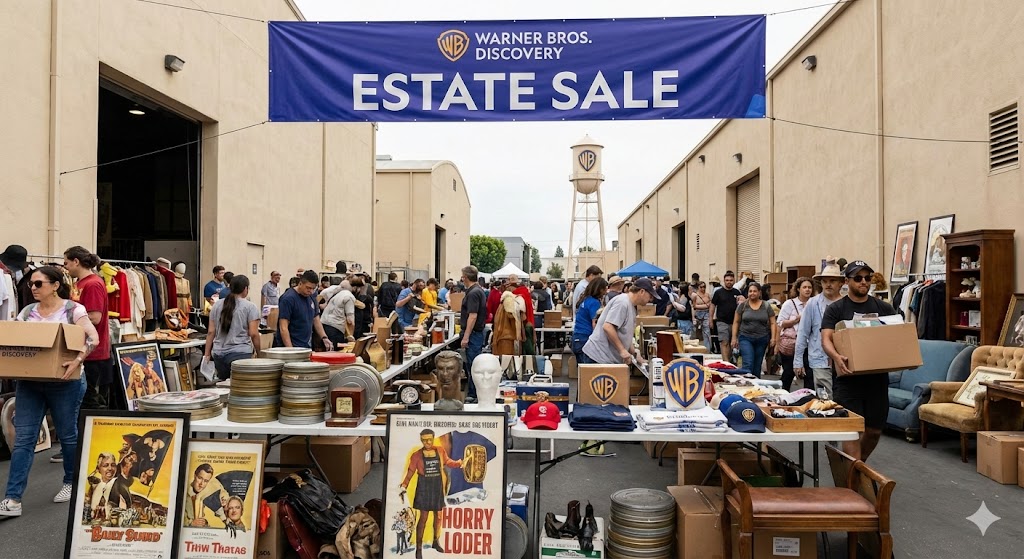
Why the WBD Sale Is a Land Grab Disguised as an Estate Sale
I woke up thinking about how much has been written about the possible sale of Warner Bros. Discovery. Netflix, Paramount, carve-outs, CNN, the bundle, the libraries. There is no shortage of takes.
It’s understandable. WBD is a big pile of legacy assets and a big pile of legacy problems, and everyone wants to be the person who calls the winning outcome.
But that story is mostly about the past.
It’s an estate sale. It’s the market deciding who inherits the last major bundle of twentieth-century entertainment scarcity.
The quieter story is the one that decides how the next medium works.
Disney’s deal with OpenAI. Warner Music and UMG turning AI litigation into licensing. Suno. Udio. Sora. These aren’t cleanup transactions. They’re rules-setting transactions. They’re early signals that legacy rights-holders aren’t trying to stop the machine. They’re trying to own the tollbooth.
That’s why the coverage gap matters. Not because it proves anything on its own, but because it shows what we keep confusing.
We keep confusing asset deals with power deals.
The WBD story is about who owns the warehouse.
The AI licensing story is about who owns the factory.
And the deeper point is bigger than entertainment.
This is IP becoming capital. Not as a metaphor. As a power structure.
The mechanism is the protection racket
Here is how the system converts itself.
The “protectors” loudly decry AI companies accused of training on copyrighted work without permission. They sue. They send cease-and-desists. They rally the public with cries of “this will destroy artists.” The message is simple. Pay up, or we will shut you down.
Then, quietly, the protectors cut a deal. The AI companies pay the protection money, licensing fees, equity stakes, revenue shares. Suddenly, the accused become legitimate partners. The operation expands. Now it’s sanctioned, scaled, and more profitable than ever.
The crime isn’t just what happens to the work. It’s where the restitution goes.
Because the money doesn’t flow to the people whose work was used. It flows to the institutions that already controlled the rights. The victims don’t get made whole. They get told the system is now “responsible.”
That’s the future getting priced.
How capital works, and why this maps so cleanly
Capital is not just money. It is control over the means of production.
Workers create value. Capital owns the factory and distribution. Capital extracts the surplus. Workers get wages. Capital accumulates.
Now swap in IP.
IP is not just rights. It is control over the means of creative production.
Creators make original work. Companies own the IP rights. Companies license systems that generate infinite derivatives. Creators get a one-time payment, maybe a backend if they are lucky. IP owners extract value from the entire derivative surface area.
AI does not create that structure. It perfects it.
Because when generation becomes abundant, ownership becomes the bottleneck.
And bottlenecks are where power lives.
Why the music deals matter
The music story is where the template is easiest to see because it is already a licensing machine.
Major labels sue Suno and Udio, arguing massive infringement tied to training on copyrighted recordings without permission. The rhetoric is maximal. This is theft. This is existential.
Then the script flips.
UMG settles with Udio and announces a partnership and a platform coming in 2026.
Warner settles with Suno, moves into licensing, takes an equity stake, and collects ongoing fees.
And then the bigger tell: all three majors sign AI licensing deals with Klay Vision in the same week. Not a one-off settlement, but coordinated category formation.
Sony has not announced a comparable settlement with Suno or Udio.
Publicly, the labels frame the issue as protection. Privately, they convert the issue into pricing.
The goal is not to end the behavior. The goal is to own the category. Once you own the licensing terms, you control who participates and at what price.
Once licensed generation exists under major label terms, the debate stops being whether it should exist. The debate becomes who gets paid, and how the payments route.
And in that routing, artists are not the primary counterparty. Rights-holders are.
That’s IP behaving like capital.
Why Disney matters more than almost anyone wants to admit
Disney’s move is not a tech bet. It’s a legitimacy bet.
When Disney licenses its characters into a generative system, it does not just create revenue. It creates precedent. Every other IP owner now knows what “legitimate” AI licensing looks like, and what pricing Disney accepted becomes the floor everyone else negotiates from.
It draws a bright line between “approved” output and “infringing” output. It turns brand protection into a tollbooth.
Before AI, IP owners still need a lot of human labor to monetize the derivative layer. Writers, actors, editors, composers, designers, crews. Even when the power dynamics are lopsided, labor still has some leverage because the derivative layer requires ongoing labor.
After AI, IP owners can license the generation system once and produce a massive derivative surface area at near-zero marginal cost.
AI doesn’t eliminate labor. It devalues labor by creating abundant alternatives that undercut pricing power.
Industrial machinery does that to labor in the broader economy. AI does that to labor in the creative economy.
The WBD sale is not just an estate sale. It is an IP acquisition
Now look back at WBD through this lens.
Everyone talks about WBD like it is a liquidation. Like it is a pile of declining assets. Like the winning move is to cut costs and strip it down.
But WBD owns IP hubs. Real ones. Brands and worlds that already behave like capital assets because they produce recurring derivative value across film, television, games, consumer products, licensing, and experiences.
In a world where AI makes derivative output abundant, IP hubs become even more valuable because they become the constraint. They become the scarce input that can legally seed endless variation.
So the WBD purchase story is not only about who owns the past. It’s also about who has enough IP mass to run the new factory at scale.
It’s a capital acquisition disguised as an estate sale.
Maker DNA
Ten years ago, Glasgow Phillips and I tried to build Maker DNA, a licensing infrastructure program at Maker Studios designed to work differently.
A two-sided marketplace where professional orgs and creators both benefited. Expanded options for both sides. Collaborative value creation. We were trying to build worker cooperatives in the IP economy.
Disney didn’t have to kill it. They didn’t have to say no.
They just aligned the incentives so we said yes to what they actually wanted.
Disney’s priorities were clear. Better claiming. Tighter control over existing IP. And Maker’s earn-out structure rewarded serving Disney’s divisions. The deal credited us for revenue we generated for other parts of Disney.
Building experimental licensing platforms that empowered creators did not optimize the earn-out. It did not serve Disney’s implicit needs. So it lost.
When power operates well, it never has to say no. It aligns incentives so you say yes.
That is what you’re watching again, at AI scale.
The incentives are finally aligned. Not for collaborative infrastructure, but for capital concentration in the creative economy.
We were early. And the power structure did not need to reject us explicitly.
It just made sure saying yes to extraction was more profitable than saying yes to collaboration.
That’s how capital works.
That’s how IP works now.
And AI just made the yes even easier.
The Endgame
This is what it looks like when a system rebuilds scarcity around ownership.
In the capital economy, labor negotiates from weakness against capital leverage. In the IP economy, creators negotiate from weakness against algorithmic leverage. The language changes. The structure doesn’t.
“Protection” is just the conversion layer. It’s how alleged theft gets turned into licensed category control, with ownership positioned as the bottleneck when creation becomes cheap.
That’s what the Disney and label deals are really doing. Not testing tools. Setting terms.
And that’s why the WBD story matters less as gossip and more as signal. It’s not just an estate sale. It’s a race to assemble the next generation of IP capital, the hubs that can seed infinite derivatives with owners collecting the toll.
IP positioned as capital.
Creators positioned as labor.
AI turning abundance into leverage.
If you work in media, this is the shift. Not a trend. A power structure.
Darren Cross is the author of No One Planned This: How Platforms Rewired Entertainment (February 2026), which traces how control broke in media—and what’s taking its place.